Apples
The tasty fruit we eat today likely descends from wild apples in Central Asia. Wild apples' genetic diversity allows growers to develop thousands of varieties. The popular “Honeycrisp,” cultivated around 1960, is a cross of Macoun and Honeygold apples. Most apples we see in the grocery store are best for eating raw, but some varieties are more commonly used for cooking.
What's in Apples?
|
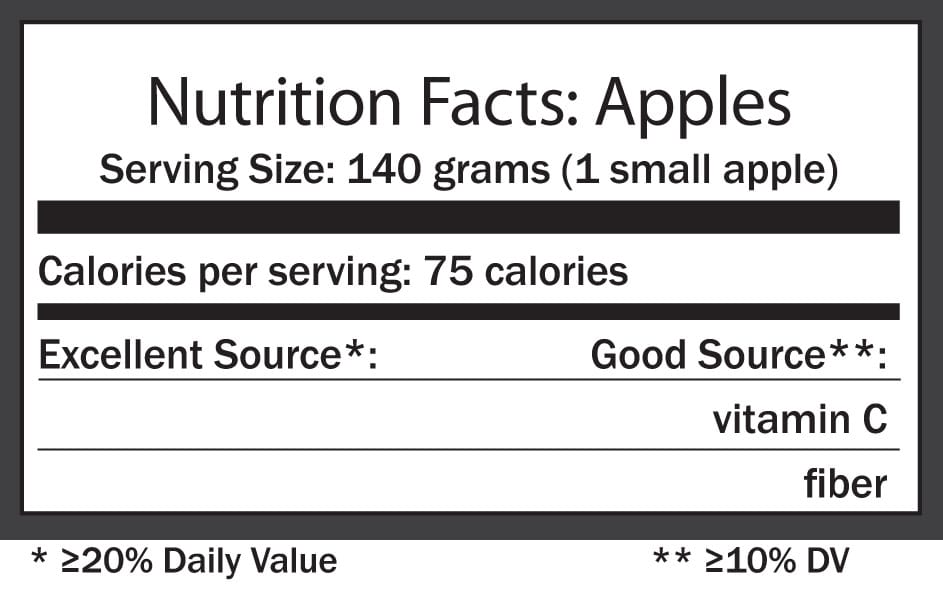
Apples are a good source of fiber and vitamin C. Most of the antioxidant power they provide comes from phytochemicals, including:
|
 |
The Cancer Research
One apple provides at least 10 percent of the recommended daily amount of vitamin C and fiber.Dietary fiber can act in several ways to lower cancer risk, including helping with weight control. (Excess body fat increases the risk of seven different cancers, and dietary fiber can increase the feeling of fullness.) Gut bacteria can use pectin, a major portion of apples’ dietary fiber, to produce compounds that protect colon cells.
Apples also contain a variety of phytochemicals that scientists are studying for their anti-cancer effects. The peel of the apple contains a third or more of its phytochemical compounds. About 80 percent of quercetin, for example, is located in the peel.
What Current Evidence Shows: AICR/WCRF Expert Report and its Updates (CUP)
| Apples are fruits that contain dietary fiber and vitamin C. After a systematic review of the global scientific literature, AICR/WCRF weighed the strength of the evidence linking these factors to lower risk for several cancers. | ||
|---|---|---|
| Source: Food, Nutrition, Physical Activity, and the Prevention of Cancer: a Global Perspective and the 2011 Continuous Update Project (CUP): Colorectal Cancer. | ||
| Diets high in: | CONVINCINGLY lower risk of the following cancers: | |
| Foods containing dietary fiber | Colorectum | |
| Diets high in: | PROBABLY lower risk of the following cancers: | |
| Fruits | Mouth, Pharynx, Larynx Esophagus Lung Stomach |
|
| Foods containing vitamin C | Esophagus | |
”Research is pointing to the fact there is not one single phytochemical that supplies apples’ anti-cancer properties... It’s the whole apple.”
- Rui Hai Liu, Cornell University.
Open Areas of Investigation: Laboratory Research
In laboratory studies, flavonoids such as quercetin and the triterpenoids found in apples have slowed the development of cancers of the colon, lung and breast in several stages of cancer development. Current research suggests that protection may come as much from directly affecting cell growth as from antioxidant activity.
Open Areas of Investigation: Human Studies
Human studies have generally focused on the category of fruits and cancer risk. But because apples are the second most commonly consumed fruit in the United States – bananas are the first – researchers have also been able to look at apple intake, specifically.
Human studies include case-control studies, which compare groups of people with and without cancer checking for a difference in apple consumption. It also includes cohort studies that follow people without cancer for several years and then look at how many apples participants generally consumed. In some of these studies, people who consume the most apples show lower cancer risk, particularly of the colon, lung and breast, although results are not consistent.
In the Kitchen
Select:
- Choose firm, shiny, smooth-skinned apples with intact stems.
- Popular varieties for eating raw include the sweet Red Delicious, Golden Delicious and Gala, and the more tart Braeburn and Fuji.
- Varieties that hold their texture in cooking and baking include Cortland, Jonagold, Pippin, Granny Smith, and Ida Red.
Store:
- Refrigerate apples in a plastic bag away from strong-odored foods and use within three weeks.
- If one apple is damaged or rotting, remove it so that it does not affect others.
Prepare:
- Chopped apples add a nice sweetness and texture to vegetable salads and extra crunch to fruit salads.
- Bake or stew apples with vegetables such as carrots, winter squash and sweet potatoes.
- For a quick dessert, core apples and stuff with raisins and cinnamon. Top with a tablespoon of cider or water, cover with waxed paper and microwave for 2 minutes each.
- Sliced apples turn brown quickly when exposed to air. Minimize browning by dipping the apples in water with lemon or other citrus juice.
- Substitute applesauce for up to 1/2 of the oil to lower calories and fat in baked goods such as quick breads and cakes.
Pork Chops with Braised Red Cabbage, Apple and Cranberries
- 1 small red cabbage, about 1 lb., quartered and cored
- 1 Tbsp. canola oil
- 4 boneless lean center-cut pork chops, 4-ounces each
- 2 cups thinly sliced red onion
- 2 Granny Smith apples, peeled, cored and cut into 12 slices each
- 2/3 cup dried cranberries
- 3/4 cup pomegranate juice
- 1/4 cup red wine vinegar
- Zest of 1/2 orange
- 1 tsp. ground cinnamon
- 1/2 tsp. ground nutmeg
- 1/4 tsp. ground cloves
- 1/4 tsp. ground black pepper
- Salt, to taste
Cut cabbage crosswise into 1/2-inch strips. There should be about 6 cups. Reserve any extra to use in salads or another use.
Heat oil in large skillet over medium-high heat. Brown pork chops on each side, about 1 minute, and remove from pan. Add onion to pan and cook until limp, 3 minutes. Add cabbage, apples and cranberries and cook, stirring occasionally, until cabbage is wilted, 4-5 minutes. Pour in juice and vinegar, and cook 3 minutes. Mix in zest, cinnamon, nutmeg, cloves and pepper. Add salt, to taste. Reduce heat to medium and cook for 15 minutes, then add chops. Cook until cabbage is tender and pork registers 160 degrees F on meat thermometer, 5-10 minutes, stirring occasionally.
To serve, spread 5 cups of cabbage onto platter, and top with chops. If there is cabbage remaining, cool and refrigerate, covered, for up to 5 days.
Makes 4 servings.
Per serving: 410 calories, 12 g total fat (2 g saturated fat), 51g carbohydrate,?28 g protein, 7 g dietary fiber, 105 mg sodium.
References
- Boyer J, Liu RH, Apple phytochemicals and their health benefits. Nutr J. 2004. 3:5.
- Gerhauser C. Cancer chemopreventive potential of apples, apple juice, and apple components. Planta Med. 2008 Oct;74(13):p. 1608-24. read online
- Bishayee A, et al., Triterpenoids as potential agents for the chemoprevention and therapy of breast cancer.Front Biosci. 2011 Jan 1;16:980-96. read online
- Bellion, P et al., Polyphenolic apple extracts: effects of raw material and production method on antioxidant effectiveness and reduction of DNA damage in Caco-2 cells. J Agric Food Chem. 2010. Jun 9;58(11):6636-42
- Gallus, S et al., Does an apple a day keep the oncologist away? Ann Oncol. 2005. Nov;16(11):1841-4.
- Jedrychowski W et al., Case-control study on beneficial effect of regular consumption of apples on colorectal cancer risk in a population with relatively low intake of fruits and vegetables. Eur J Ca Prev 2010. 19(1):42-7
- Feskanich, D et al. Prospective study of fruit and vegetable consumption and risk of lung cancer among men and women. J Nat Cancer Inst, 2000. 92:1812.
- Knekt, P et al., Dietary flavonoids and the risk of lung cancer and other malignant neoplasms. Am J Epidemiol 1997. 146:223.
- Knekt, P et al., Flavonoid intake and coronary mortality in Finland: a cohort study. BMJ, 2/24/1996. 312:478.
- Gerhauser C., Cancer chemopreventive potential of apples, apple juice, and apple components. Planta Med. 2008 Oct;74(13):1608-24. read online
- World Cancer Research Fund/American Institute for Cancer Research, Food, Nutrition, Physical Activity and the Prevention of Cancer: a Global Perspective, 2007: Washington, DC. p. 82-113.
- U.S. Department of Agriculture, Agricultural Research Service. 2011. USDA National Nutrient Database for Standard Reference, Release 24. Nutrient Data Laboratory Home Page, read online
Source: AICR.org
Comments