Lowering Risk of a Major Eye DiseaseMajor U.S. dietary patterns are associated with the risk of developing an age-related eye disease, according to a study funded in part by Agricultural Research Service. Age-related macular degeneration (AMD) is a chronic, progressive eye disease and is a leading cause of blindness among people aged 65 and older. For the dietary-patterns study, researchers analyzed existing data from a major federal clinical trial known as the age-related eye disease studies. Two major food-intake patterns emerged from this analysis. Those who adhered to the "Oriental pattern" consumed relatively high intakes of vegetables, legumes, fruit, whole grains, tomatoes and seafood. Those who adhered to the "Western pattern" consumed relatively high intakes of red meat, processed meat, high-fat dairy products, French fries and refined grains. The analysis showed that adherence to the Oriental pattern is associated with reduced odds of AMD, and people who consumed the Western pattern had markedly increased odds. For details, contact: Chung-Jung Chiu, (617) 556-3157, Laboratory for Nutrition and Vision Research, ARS Jean Mayer Human Nutrition Research Center on Aging, Boston, Massachusetts |
|

|
|
Infrared-Based Peeling of Tomatoes May Improve Precision, Save WaterAgricultural Research Service, industry and university scientists have recently patented a process for using infrared heating to simplify removal of tomatoes’ tight-fitting peels, which may offer advantages over other peeling technologies. For example, infrared-based peeling is mostly waterless and might also reduce the expense of recycling the water that is used or the proper disposal of it. That’s a benefit for canneries in sometimes drought-stricken California, the state that produces the majority of the nation’s processing tomatoes. What’s more, the infrared process may help reduce wasteful "overpeeling" of tomatoes that can occur when too many layers of tomato are inadvertently removed along with the peel. For details, contact: Zhongli Pan, (510) 559-5861, Healthy Processed Foods Research Unit, Western Regional Research Center, Albany, California. |

Shifting Out of High-Calorie HabitsA new study suggests it is possible to change the cycle of craving unhealthy foods by retraining the brain to stop activating its reward centers on exposure to a steady stream of high-calorie foods and visual triggers. An Agricultural Research Service-funded study addresses concerns among weight-loss experts that when people get used to eating instant-gratification foods, such habits may be nearly impossible to stop or reverse. In the study, one group was placed on an at-home weight-loss intervention of lower calorie foods for 6 months. The other was a no-intervention control group that ate normally at home. To satisfy brain areas linked with cravings, the intervention group's diet provided about 50 percent of daily calories from "slow-digesting" carbohydrates and high-fiber foods. High-protein foods and healthy fats each provided 25 percent of daily calories. The group received 1 hour of positive reinforcement support sessions most weeks and meal plans that centered on hunger reduction, portion control and high satisfaction. The intervention group achieved significant weight loss—about 14 pounds each. For details, contact: Susan B. Roberts, (617) 556-3238, Energy Metabolism Laboratory, ARS Jean Mayer Human Nutrition Research Center on Aging, Boston, Massachusetts. |
|
|
|
Natural Enzyme Examined as Antibiotics AlternativeLysozyme, a naturally occurring antimicrobial enzyme, is used in food and beverage applications such as cheese- and wine-making. Now, it may also prove useful as an antibiotic alternative for improved feed efficiency and growth in pigs, according to studies by Agricultural Research Service scientists. In a recently published trial, the researchers compared the growth rates and weight gains of two groups of 600 piglets placed on one of three diet regimens: a standard feed regimen of corn/soybean meal and specialty protein, a second regimen of the same with lysozyme added, and a third containing the antibiotics chlortetracycline and tiamulin hydrogen fumarate rather than lysozyme. Piglets on lysozyme- or antibiotics-treated feeds grew approximately 12 percent faster than untreated pigs—even in uncleaned pens, suggesting that the treatments successfully ameliorated the effects of indirect immune challenge. For details, contact: William Thomas Oliver, (402) 762-4206, Nutrition and Environmental Management Research Unit, U.S. Meat Animal Research Center, Clay Center, Nebraska. |

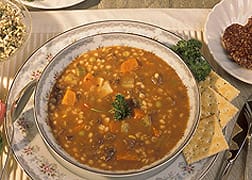
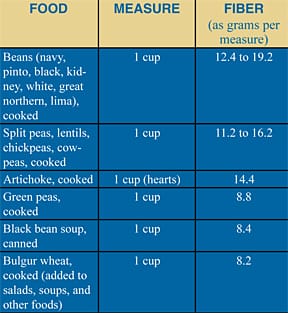
Strategies to Control CravingsNew research emphasizes interventions with a high-fiber, slow-digesting carbohydrate intake—at the lower end of the recommended range rather than below it—for weight control because that is a good level where people can enjoy some carbs without having so many that they trigger food cravings and eating-control issues. A moderately low carbohydrate intake, in keeping with the Recommended Dietary Allowance (RDA) for carbohydrates is 130 grams, or 520 calories, per day. Based on these studies, another dietary key to managing body weight is getting ample food fiber, which is a subset of the carbohydrate group. The daily adequate intake for fiber is 38 grams for men and 25 grams for women. But significantly—dietary fiber intake among U.S. consumers averages only 16 grams per day. Fiber is a weight-control cornerstone of these intervention studies because it helps achieve the feeling of fullness after eating. For details, contact: Susan B. Roberts, (617) 556-3238, Energy Metabolism Laboratory, ARS Jean Mayer Human Nutrition Research Center on Aging, Boston, Massachusetts. |
|
|
|
New Tracking Tool for Pathogen InvestigatorsA cost-effective diagnostic tool and dataset for identifying various strains ofSalmonella has been developed by an Agricultural Research Service scientist. The tool, called Intergenic Sequence Ribotyping (ISR), is helping improve poultry production and human health internationally, because it helps controlSalmonella in the field and in consumer poultry products. The traditional method, called Kauffmann-White, or KW, is expensive and identifies a particular serotype in only 80 percent of cases. ISR is being used to serotype strains within a particularly virulent group called Salmonella enterica, which is the type associated with foodborne illness. ISR technology is available to specialized laboratories, producers or other qualified users who sign a proprietary Material Transfer Agreement. For details, contact: Jean Guard, (706) 546-3446, Egg Safety and Quality Unit, U.S. National Poultry Research Center, Athens, Georgia. |

Slavin Delivers ARS 2015 W.O. Atwater Memorial Lecture at Experimental Biology"Food is not a talisman: Reflections on the science and practice of nutrition," was the title of Joanne L. Slavin's 2015 W.O. Atwater Memorial Lecture, delivered at the Experimental Biology meeting in Boston. Slavin is an internationally renowned expert on the role of fiber and whole grains in the diet and their bearing on human health. She is currently a professor in the Department of Food Science and Nutrition at the University of Minnesota. The W.O. Atwater Memorial Lecture was established by Agricultural Research Service in 1968 to honor the memory of Wilbur Olin Atwater (1844-1907) and to recognize scientists who have made unique contributions toward improving the diet and nutrition of people around the world. Atwater, considered the father of modern nutrition research and education, was USDA’s first chief of nutrition investigations. Slavin summed up her presentation by mentioning that current obsessions on nutritional bad guys—saturated fat, sodium and added sugar—have left the science arena. She added that nutritional guidance must be based on strong science or the public is misled with hollow promises of the magical properties of foods. For details, contact: Joanne Slavin, (612) 624-7234, Department of Food Science and Nutrition, University of Minnesota, St. Paul, Minnesota. |
|

|
|
Recipe for Flavorful Tomatoes: Heat Before ChillingTomatoes are often picked green and then stored at low temperatures to slow ripening during and after transport. They are then ripened at about 68 °F before being placed on store shelves. That process makes them easier to ship and extends their shelf life but could be the reason why "supermarket tomatoes" often taste bland. An Agricultural Research Service chemist found a five-minute heat treatment before chilling stemmed the loss of several flavor volatiles known to give fruity and floral scents to foods, and treated tomatoes had more flavor than tomatoes that were only chilled. For details, contact: Jinhe Bai, (772) 462-5880, Citrus and Other Subtropical Products Research, U.S. Horticultural Research Laboratory, Fort Pierce, Florida. |

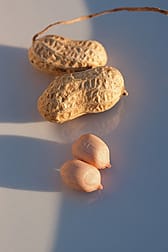
A New Spanish Peanut Variety for Consumers, GrowersA new Spanish peanut variety that packs high levels of healthful oleic acid has been released by Agricultural Research Service scientists and university cooperators. The new variety, called OLé, could provide producers and consumers with a peanut that has heart-healthy qualities as well as disease resistance and longer shelf life. Oleic acid is a beneficial monounsaturated fatty acid, and the high oleic acid levels in the peanut make its oil a heart-healthy one for consumers. Growers like the new variety because of its disease resistance and potential for high yield and grade. For details, contact: Kelly D. Chamberlin, (405) 624-4141 ext. 225, Wheat, Peanut and Other Field Crops Research Unit, Stillwater, Oklahoma. |
|
|
|
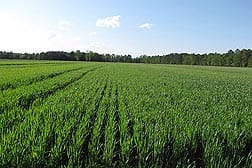
Wheat Varieties Make Way to Breads and Malt BeveragesTwo varieties of wheat, released for production in 2009 by a group led by an Agricultural Research Service scientist, have now become valued ingredients in products of two North Carolina businesses. Appalachian White and NuEast are being used in bread and beer. NuEast is a hard red winter wheat and Appalachian White is a hard white winter wheat. Some businesses in North Carolina are now using the wheat varieties in some of their products. ARS has a long-running project with Carolina Ground, an artisan mill and bakery in Asheville, North Carolina. The bakery uses Appalachian White and NuEast in their artisan flours and baking recipes. Riverbend Malt House—the first malt house in the eastern United States—makes their wheat malt mainly from Appalachian White wheat. For details, contact: David S. Marshall, (919) 515-6819), Plant Science Research Unit, Raleigh, North Carolina. |
Comments