|
|||||||
|
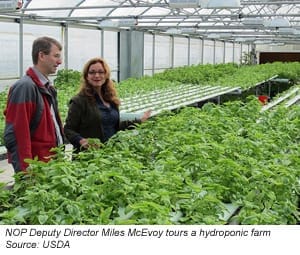
FOR IMMEDIATE RELEASE Prominent Government Watchdog Asks Obama Administration to Previous administrations faced plenty of criticism from organic advocates. However, during the Clinton and Bush years, USDA officials were universally viewed as respecting the purview of the National Organic Standards Board (NOSB). This 15-member, multi-stakeholder body was established by Congress to review all synthetic/non-organic ingredients and materials used in organic farming and food production. Congress also mandated that the USDA Secretary seek the counsel of the NOSB on all aspects of implementing the Organic Foods Production Act (OFPA). "Although the USDA ignored some of the NOSB recommendations in the past, until recently they never went 180 degrees in the opposite direction in deference to the preferences of powerful corporate interests," said Kevin Engelbert, a former NOSB member from Nichols, New York. "And they never reversed the 23-year tradition of allowing the NOSB the autonomy to create their own procedure manual, set their own agenda and create their own workplan." In 2009, President Obama and Mr. Vilsack were universally praised for their choice of appointing Miles McEvoy, a former organic official with the state of Washington, to lead the NOP. Yet, after an extended honeymoon, public sentiment has taken a decisive turn toward disappointment and controversy in recent years, brought to a head by several unilateral decisions made by the USDA without collaborating, as had been the custom, with the NOSB. Although many organic industry observers were already becoming disillusioned with the approach during the Obama/Vilsack administration, Mr. McEvoy threw gasoline on the fire, in the fall of 2013, when he unilaterally reversed the "Sunset" procedure. Mandated by Congress, this procedure required the NOSB to review every synthetic material/ingredient approved for use in organics every five years. Dr. Barry Flamm, a conservation expert and former chairman of the NOSB later lamented, "I thought we had improved the Sunset process during my tenure on the Board. Besides taking the teeth out of the Sunset provisions, the reversal is a real affront to all of us who believed in the public governance process that Congress built into the organic law." Under the old procedure, synthetics were reviewed every five years and then sunsetted off the National List unless voted to be relisted if appropriate. Under the new USDA procedures, these materials will instead stay on the list in perpetuity unless the NOSB takes action to remove them (and in a complete reversal, the removal of a material will require a two-thirds super-majority to remove a material). Although the change in the Sunset provisions, bypassing the NOSB, was supported by many of the corporate agribusinesses that have invested in organics, by a number of the major certifiers who oversee their operations, and by industry lobbyists, it was universally viewed as a stick in the eye by farmers, consumers and public interest groups that have been able to collaborate on the process in the past. In addition to "gutting the Sunset procedure," as The Cornucopia Institute referred to it, a diverse subset of organic stakeholders have also expressed grave concern about several other positions the USDA has taken in direct conflict with the direction of the NOSB. These include: Nanotechnology Hydroponics Aquaculture Organic Regulatory Theater Enforcement Despite the potential deterrent effect, the USDA has systematically refused to publicize the full background, nature of violations, and names of any companies or farms under investigation – even after these entities were found to have broken the law and were fined or otherwise penalized. In what appears to be a serious ethical lapse, at a recent USDA training for accredited organic certifiers, Mr. McEvoy appeared to coach attendees on damage control tactics concerning organic livestock factory farms that have been the target of recent outside investigations and accused of violating organic law. The take-away message by certification officials from what Mr. McEvoy said was that industry watchdogs were "bashing your operations." [emphasis added] "Since the NOP is responsible for not only investigating the alleged improprieties at these factory farms, but also overseeing the performance of the certifiers that inspect those operations, the apparent bias is extremely troubling," added Kastel. This is not the first time The Cornucopia Institute has called upon the USDA Secretary to change management at the NOP for what appears to be inappropriate favoritism and collaboration with the corporate sector. Cornucopia, in 2009, collaborated with a Washington Post investigation exposing a sweetheart deal between a powerful industry lobbyist and Dr. Barbara Robinson, then head of the USDA’s organic program. She allegedly illegally approved materials for use in organics, overruling her staff and bypassing the NOSB. Cornucopia subsequently called upon both President Obama and USDA Secretary Vilsack to remove Dr. Robinson, which ultimately occurred later that year. "For those of us who were practicing organic agriculture prior to Congress authorizing the USDA to oversee this industry, the behavior of current management at the NOP is a big disappointment," said Helen Kees, Cornucopia's Board President and an organic beef and vegetable producer from Wisconsin. "The authority of the NOSB has been undermined, and it doesn't really matter whether Miles McEvoy is the chief architect or just willingly carrying out orders. The organic community needs an independent voice that can be universally respected to head this important regulatory body," Kees asserted. -30-MORE: In the past, the process by which the NOSB operated was developed by the Board itself, in collaboration with organic stakeholders, after being officially noticed in the Federal Register. "The Policy Procedure Manual (PPM) was developed by the Board, after extensive public input, and approved by the USDA during the Bush administration," according to former NOSB Chairman Dr. Flamm. During his five years on the NOSB, Dr. Flamm also served for four years as the chairman of the Policy Subcommittee, which developed the NOSB’s PPM. "You don't need to take The Cornucopia Institute's word alone in supporting the thesis that the USDA has overstepped their legal authority and undermined the unique process Congress set up to assure organic stakeholders that corporations would not wield undue influence in promulgating organic law," Cornucopia’s Kastel added. Last year, in a blunt letter, the two primary authors of the enabling legislation, the Organic Foods Production Act of 1990, Representative Peter DeFazio and the Senate's longest-serving member, Patrick Leahy, both clearly expressed that, in their unique position to judge, the edict reversing the Sunset procedures clearly violated the will of Congress. The two congressional leaders were echoed in another letter to Secretary Vilsack, by three prominent past chairman of the NOSB: James Riddle, founder of Independent Organic Inspectors Association; Jeff Moyer, a longtime organic farming educator/leader with the Rodale Institute; and Dr. Barry Flamm, a natural resource and environmental consultant, the first certified organic cherry producer in Montana, and board secretary of The Cornucopia Institute. More Organic Regulatory Theater Currently, the USDA is contracting nonprofit organizations funded by corporate agribusiness to conduct the materials reviews. In one case, the nonprofit wing of the powerful industry lobby group, the Organic Trade Association, is preparing Technical Reviews for the NOSB. “This is a clear conflict of interest and the proverbial fox watching the organic chicken coop,” stated Cornucopia’s Kastel. “A further cloak of secrecy the USDA has donned, regarding the conflicts exposed in The Organic Watergate report, is that the agency is now refusing to disclose the names of the scientists writing the Technical Reviews for this public body —this makes critiquing potential conflicts of interest impossible.” Along with the nearly insurmountable workload imposed on the NOSB by the USDA, the agency has refused to spend adequate dollars to pay for Technical Reviews the NOSB has requested. Instead, NOP officials are touring the country in what some have charged is an expensive public relations campaign selling organics. “This leaves the NOSB ill-equipped to rigorously review many of the synthetic and non-organic materials that are up for review and that were not properly scrutinized when they were added to the National List in the first place,” stated Kastel. |
Politics Public
Prominent Government Watchdog Asks Obama Administration to Remove Organic Leadership at USDA
The Cornucopia Institute wrote to the White House and Agriculture Secretary Tom Vilsack asking for new leadership at USDA's National Organic Program, saying officials have overridden the National Organic Standards Board. Fifteen organic stakeholders are suing the department.
About the author
Latest articles
You may be interested in
Food
Edward & Sons Trading Company Offers New Organic Foods
Food
Health Food News: Edward & Sons Introduces Two New Organic Young Unseasoned Jackfruit Items - Versatile Vegan Alternative To Meat
Diet
Ketogenic diet, hyperbaric oxygen therapy boost cancer survival
Diet
Brain cancer patients should avoid using vinegar?
Drug
Gcmaf a universal cancer cure?
Lifestyle
Fasting protects cancer patients against chemotherapy
From this writer
Food ConsumerPolitics
This is big - newsletter 122216 from Organic Consumers Association
Politics
A Report (on Fluoridation) from New Zealand
Food
Edward & Sons Trading Company Offers New Organic Foods
Politics
Show your support for Organic Consumers Association
Food
Health Food News: Edward & Sons Introduces Two New Organic Young Unseasoned Jackfruit Items - Versatile Vegan Alternative To Meat
Diet
Comments